


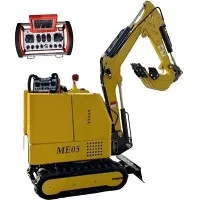


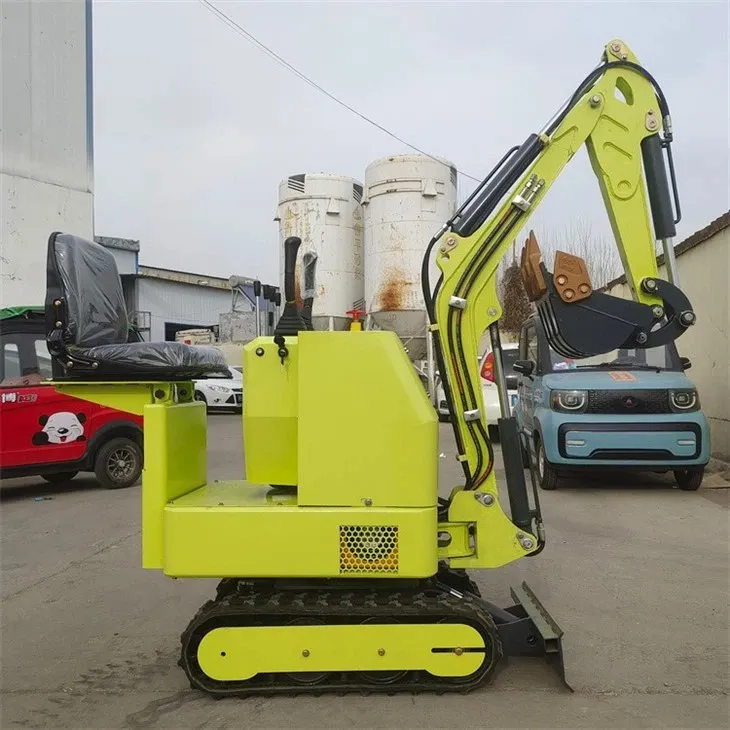
Demolition Robot
Ant Cloud Intelligent Equipment (Shandong) Co., Ltd.,Established in2019, is a professional engaged in the research, development, sale and service of mini excavator ,electric mini excavator ,and remote control excavator.We are located in Jining, Shandong Province with convenient transportation access. Dedicated to strict quality control and thoughtful customer service, our experienced staff members are always available to discuss your requirements and ensure full customer satisfaction. We warmly welcome customers from at home and abroad to cooperate with us for common success.
Why Choose Us
Our Factory
Ant Cloud Intelligent Equipment (Shandong) Co., Ltd.,Established in2019, is a professional engaged in the research, development, sale and service of mini excavator ,electric mini excavator ,and remote control excavator.
Our Product
Mini excavator, electric mini excavator, remote control mini excavator, mini skid steer loade.
Product Application
It is widely used in many fields such as municipal road, house decoration, tunnel construction, foundation engineering, agricultural production, mining, landscaping and so on.
Our Service
More than 100 experienced technicians and professional service teams provide pre-sale, in-sale, and after-sale services for every valued customer.


Demolition robots are a type of heavy machinery. Their primary is to demolish buildings once it's time for new development. However, these robots aid in various other purposes too.Demolition robots are widely used in the construction industry for demolishment and evacuation. They are crucial in moving heavy materials from the ground floor to higher floors.Currently, demolition robots occupy 90% of the robotics construction market. These machines are ever-growing in popularity. And as their applications continue to expand, they may even occupy more of the market.
Advantages of Demolition Robot
Enhanced safety
One of the most significant advantages of using demolition robots is the enhanced safety they bring to the construction site. By eliminating the need for manual labor in hazardous environments, these robots significantly reduce the risk of injuries and accidents. Operators can control the robot from a safe distance, away from falling debris and other potential dangers.
Precision demolition
Demolition robots excel at precision work, allowing for the selective dismantling of structures with minimal collateral damage. Whether it's removing specific sections of a building or navigating through confined spaces, these robots can achieve precise results that would be difficult to replicate using traditional methods.
Increased efficiency
With their ability to work quickly and efficiently, demolition robots can significantly speed up the demolition process. Their compact size allows them to access tight spaces that may be inaccessible to larger machinery, reducing the need for manual labor and streamlining the overall workflow.
Versatility
Demolition robots come equipped with a variety of attachments and tools, allowing them to adapt to a wide range of demolition tasks. From breaking concrete to cutting through steel, these robots can handle diverse materials and structures with ease, making them incredibly versatile assets on the construction site.
The demolition robott utilizes electrical power to drive hydraulic pumps and actuators. High-pressure hydraulic fluid is sent to the robotic arms, empowering them to generate tremendous forces to break and demolish bricks. The robot is remotely controlled via a wireless controller by an operator at a safe distance away from the harsh working environment inside the kiln. The flexible robotic arms equipped with demolition tools such as hydraulic breakers and grapples can reach narrow spaces and break bricks in any direction. Advanced hydraulic technology enables the robot to break extremely hard bricks quickly while exerting controllable forces to avoid damaging the kiln shell. The demolished bricks are removed efficiently by the grippers and grab claws. The wireless control system allows maximum maneuverability of the robot in the confined kiln space while ensuring optimum safety.

How to Choose Demolition Robot
Codes of safety
Safety codes are required to minimize responsibility. Select a robot that complies with all necessary safety regulations. Project-specific limitations may apply. Purchasing the appropriate equipment reduces your responsibility and safeguards your staff.
Software for offline programming at a reasonable price
The software has been preprogrammed for demolition robots. This contains codes for a range of tasks and purposes. Select a robot with a minimal amount of software installed. The program frequently comes with additional offline functions. These will just drive up the expense of your initiatives if they are not essential. Paying for only what you truly require is your goal.
Minimal energy usage
Think about robots that produce high value while using little energy. Robots with minimal energy consumption but great value are perfect for the environment and the economy. Robots that are lightweight, thin, and well-designed need less energy to generate value. This boosts productivity while saving money and time.
Features that a robot can control
Seek for robots that have attributes that will help you and your projects. The majority of individuals search for small size, slender form, quick processing, and expandability. Expandability is required to make room for additional features and equipment. Finding a solution that fits the type of projects you work on is ideal.
Comparing Demolition Robots with Traditional Demolition Methods
Demolition robots: A game-changer for efficiency and safety
One of the most striking advantages of demolition robots is their ability to boost efficiency significantly. Unlike manual methods, these robots can operate continuously without fatigue, enabling faster project completion. They are designed to tackle challenging environments that would be hazardous or inaccessible to human workers, such as confined spaces or areas with toxic substances. Moreover, their precision in demolition tasks ensures minimal damage to surrounding structures, which is often a concern with traditional methods.
The safety aspect of demolition robots cannot be overstated. With remote-controlled operation, these robots allow operators to maintain a safe distance from the demolition site, drastically reducing the risk of accidents and injuries. This safeguards the workforce and ensures compliance with stringent safety regulations in the industry.
Cost-effectiveness and environmental impact
While the initial investment in demolition robots may be higher than traditional tools, the long-term cost savings are substantial. Reduced labor costs, faster project turnaround, and minimal need for repairs or redoing work contribute to a more economical demolition process. Additionally, the precision of robotic demolition results in less waste generation, aligning with eco-friendly practices and reducing disposal costs.
Demolition robots also play a pivotal role in reducing the environmental impact of demolition projects. Their precise operation minimizes the release of dust and pollutants, contributing to a healthier work environment and lessening the ecological footprint of the demolition process.
Harnessing the power of robotic demolition
In the realm of demolition, power and efficiency are paramount. Demolition robots stand out for their formidable power, capable of breaking through rigid materials with precision and force. Unlike traditional handheld tools, these machines are engineered to deliver consistent, high-impact performance. This power does not come at the expense of control, as demolition robots offer precise manipulation, ensuring that the demolition process is robust, targeted, and controlled.
The advantage of portability in demolition robots
Portability is another crucial aspect where demolition robots excel. Traditional demolition equipment often requires significant setup time and can be cumbersome, especially in remote or confined sites. In contrast, demolition robots are designed with mobility in mind. Compact and easily maneuverable, these machines can be quickly transported to various locations and deployed with minimal setup time. Their ability to navigate tight spaces and uneven terrain makes them invaluable in complex demolition environments where traditional methods would struggle.
Application of Demolition Robot


Construction and renovation projects
In construction and renovation projects, remote-controlled demolition robots play a critical role. These machines are ideal for tasks that require precision and control, such as breaking through concrete walls, removing floor tiles, and dismantling structures in confined spaces. Their compact size and maneuverability make them perfect for indoor projects where larger equipment cannot be used. Additionally, they reduce the risk of injury to workers by keeping them at a safe distance from hazardous tasks.
Industrial demolition
Remote-controlled demolition robots are widely used in industrial demolition due to their ability to handle heavy-duty tasks. In factories, warehouses, and other industrial settings, these robots efficiently demolish large structures, machinery, and equipment. They are particularly useful in environments with hazardous materials, such as asbestos or chemicals, as they minimize human exposure to these dangers. The precision of remote-controlled robots ensures that demolition is carried out safely and without damaging surrounding infrastructure.
Nuclear decommissioning
The nuclear industry benefits significantly from remote-controlled demolition robots, especially during decommissioning projects. These robots can safely dismantle radioactive structures and equipment, reducing the risk of radiation exposure to workers. Their advanced technology allows for precise cutting, drilling, and breaking, ensuring that radioactive materials are handled and disposed of safely. The use of demolition robots in nuclear decommissioning enhances safety and efficiency, making the process more manageable and less hazardous.
Disaster response
In disaster response scenarios, remote-controlled demolition robots provide critical support. Following earthquakes, hurricanes, or other natural disasters, these robots can navigate through debris to perform search and rescue operations. They are equipped with tools to break through rubble, access confined spaces, and remove obstacles, enabling rescue teams to reach survivors more quickly and safely. The robots' ability to operate in unstable environments makes them invaluable in emergency situations.
Bridge and tunnel demolition
Remote-controlled demolition robots are also essential in the demolition of bridges and tunnels. These structures often require precise and controlled demolition to avoid collateral damage and ensure the safety of surrounding areas. The robots' precision tools can cut through concrete, steel, and other materials with accuracy, making them ideal for such complex projects. Their remote operation capability ensures that workers remain at a safe distance from potential hazards.
Underwater demolition
Underwater demolition is another application where remote-controlled demolition robots excel. These robots are designed to operate in submerged environments, performing tasks such as dismantling underwater structures, pipelines, and debris removal. Their robust construction and advanced technology allow them to function effectively in challenging underwater conditions, where human divers would face significant risks. The use of demolition robots in underwater projects enhances safety and efficiency, making them a preferred choice for such operations.
Historical preservation
In historical preservation projects, remote-controlled demolition robots provide a delicate touch. These robots are used to carefully dismantle parts of structures that need to be preserved or restored. Their precision tools and controlled operation ensure that valuable historical artifacts and architectural elements are not damaged during the demolition process. This application is crucial in maintaining the integrity of heritage sites and buildings.
Complete jobs faster
Take a wall sawing job, for example. Removing a 10-by-3-m (32.8-by-9.8 ft.) wall in a confined space with a saw requires, on average, 25 cuts. Depending on depth, this might take several passes. Once cut, the concrete blocks need to be broken down for easier removal. The whole process would take at least four days with two saws and require a crew of at least three-two to run the saws and at least one more to handle removal.
Using a remote-control demolition robot can cut the time in half. Rates vary based on machine, material and depth, but demolition robots are capable of extraordinary productivity-up to 5 cubic meters (176.6 cu. Ft.) per hour in some cases. And, when you're cutting them to lift them yourself, the concrete needs to be cut into smaller sections. In contrast, demolition robots cut through the old concrete and easily lift a six-by-six slab of concrete without requiring any manual labor."
Keep operators out of harm's way
Machine reach, paired with a 300-m. (984-ft.) remote operating distance, also keeps workers away from jobsite dangers such as falling objects, flying debris, weak floors, ledges and silica dust.
However, limiting the human element in the more manual aspects of concrete cutting is perhaps the biggest safety advantage. Using a demolition robot minimizes the need for handheld saws, coring equipment or pneumatic breakers. Handheld pneumatic equipment-some of which can weigh 40 lbs. (18 kilograms) or more-can easily fatigue workers and lead to long-term vibration-related injuries. Robotic demolition also creates smaller rubble that is more easily lifted and removed, further reducing strain on workers.
Versatility with a range of attachments
Attachments can further increase jobsite versatility. A crusher attachment, for example, is quieter than a saw or handheld pneumatic breakers. This opens up new opportunities in areas where saws would be too noisy, such as near hospitals or schools.
A demolition robot with the right array of attachments not only increases productivity, but also limits the need for additional support equipment on congested jobsites. Crusher attachments allow for the breaking up and disposal of concrete and rebar on site. Vacuum lifting attachments increase productivity while moving concrete slabs.
Keeping Steel Slag Pots Clean: How Demolition Robots Help

In steelmaking, molten slag is deposited into large slag pots for transportation and processing. As the slag cools and solidifies over multiple heats, it hardens into a dense mass inside the pots. Buildup of hardened slag reduces the volume available for fresh molten slag and impedes material handling, requiring frequent cleaning. Manual slag pot cleaning is an arduous, hazardous job, exposing workers to risks like burns, crushing injuries and silica inhalation.
Demolition robots provide a safe, efficient solution for breaking up and removing hardened slag from slag pots. Operated remotely, the robots can enter the harsh interior environment of slag pots that remain too hot or confined for human access. Powerful hydraulic attachments like breakers are used to fracture the slag into fragments for removal by bucket or grab. Some robots feature integral dust and fume extraction systems to control airborne pollutants during cleaning.
Before each new steelmaking cycle, the slag pots are positioned below the ladle cranes for the demolition robots to systematically break up and remove compacted layers of slag. Emptying and cleaning just one large slag pot can take a human crew up to 8 hours; a demolition robot can complete the work in under 3 hours with minimal risk. Their greater productivity minimizes downtime in steelmaking operations.
With customized attachments, demolition robots can handle most any buildup tendency inside slag pots, from solidified steel and slag to ladle skulls, alloy chunks and accretion. They eliminate the safety risks of difficult manual labor at extreme temperatures, while proportionally reducing the time, cost and energy consumption of cleaning cycles. In an industry where continuous steel production is paramount, these benefits ensure slag pots remain unobstructed, available and ready to receive each new batch of molten metal.
By handling one of the most perilous and time-consuming tasks in steel mills, demolition robots for slag pot cleaning provide a competitive advantage. Their implementation helps steelmakers improve safety, increase output, and optimize costs in the unending cycle of melting, molding and reprocessing one of the world's most essential materials. Hardened slag is no match for these futuristic helpers that embody power, efficiency and round-the-clock dependability. Demolition robots keep steel slag pots clean and steelmaking operations running full tilt.
FAQ
Hot Tags: demolition robot, China demolition robot manufacturers, factory, Household Mini Digger, Mini Excavator For Indoor Use, 1ton Electric Mini Excavator, Home Mini Excavator, Mini Crawer Hydraulic Excavator, Mini Excavator Landscaping
You Might Also Like


Send Inquiry