




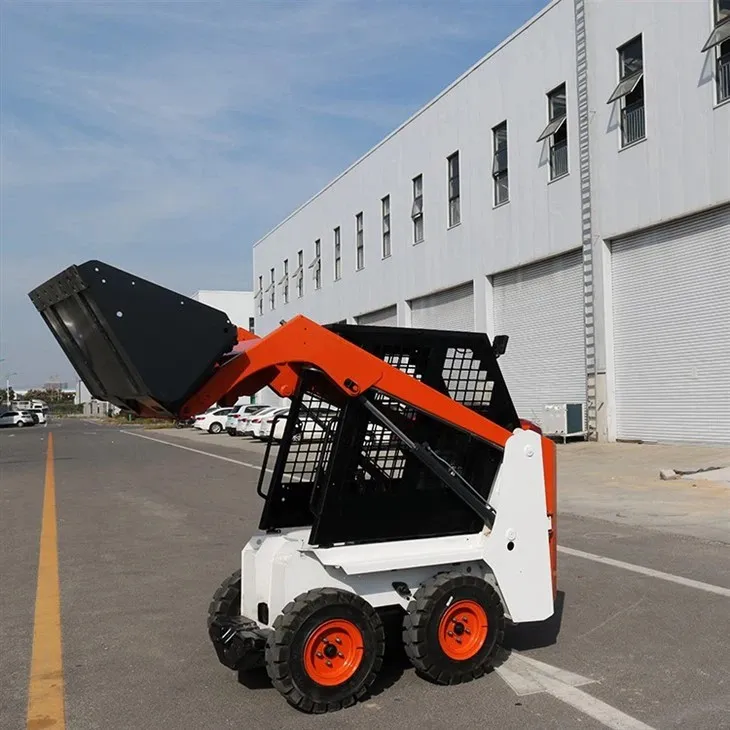
Mini Skid Steer Loader
Ant Cloud Intelligent Equipment (Shandong) Co., Ltd.,Established in2019, is a professional engaged in the research, development, sale and service of mini excavator ,electric mini excavator ,and remote control excavator.We are located in Jining, Shandong Province with convenient transportation access. Dedicated to strict quality control and thoughtful customer service, our experienced staff members are always available to discuss your requirements and ensure full customer satisfaction. We warmly welcome customers from at home and abroad to cooperate with us for common success.
Why Choose Us
Our Factory
Ant Cloud Intelligent Equipment (Shandong) Co., Ltd.,Established in2019, is a professional engaged in the research, development, sale and service of mini excavator ,electric mini excavator ,and remote control excavator.
Our Product
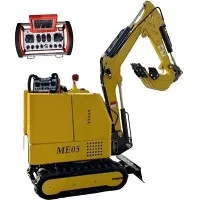
Mini excavator, electric mini excavator, remote control mini excavator, mini skid steer loade.
Product Application
It is widely used in many fields such as municipal road, house decoration, tunnel construction, foundation engineering, agricultural production, mining, landscaping and so on.
Our Service
More than 100 experienced technicians and professional service teams provide pre-sale, in-sale, and after-sale services for every valued customer.


A mini skid steer loader also called a compact utility loader (cul), is a small but highly versatile piece of compact construction equipment. These mini loaders feature a powerful hydraulic lifting arm that can utilize various attachments for tackling all sorts of outdoor jobs.Despite their small stature, typically ranging from just a couple of feet tall and wide to about 4 feet tall and 5 feet across, mini skid steers pack impressive strength.
Advantages of Mini Skid Steer Loader
360 degree view
The operator's platform boasts a 360 degree view of the surrounding area, which is a great advantage when it comes to safety on the building site. The operator is able to see any other vehicles, materials or people around the vehicle without any dead spots in the visibility. On many sites, space can be limited and having such wide range visibility makes it possible to manoeuvre the machine quickly with no safety risks involved.
Time saving
The size of the equipment makes it easier to have an efficient, easy to access entry point giving the compact loader operators the ability to access the machine without the requirement to climb over large attachments, which can be physically draining, unsafe and time consuming. Frequently the operator needs to leave the vehicle for a short amount of time to undertake other tasks. The small size and easy to access entry point of the equipment makes it possible to hop on and off quickly and safely.
Narrow access
The fact that the mini skid steer loader proves to be small in size makes it possible to easily enter the grounds of small residential areas and construction sites. Urban environments mean tight entry points and narrow streets that require a machine that is capable to reach sometimes complex work sites. Not only that, but its size makes it easier and safer to manoeuvre on a smaller site by minimising the risks for everyone around.
Cost saving
The mini skid steer loader will also help your company reduce labour costs when it comes to hiring or training professional operators. This machine does not require a license, which means training staff, is easy and cost effective. Utilising a mini loader in your business effectively transfers the impact of manual labour from the workers body to the machine, leaving staff feeling physically fit at the end of the day, and not exhausted by the end of the week.
A mini skid steer loader is a compact piece of equipment designed for digging, grading, hauling materials, and other tasks on construction sites, farms, and landscaping projects.The loader is operated by an operator who sits inside a comfortable cab, controlling the machine using joysticks and pedals. The engine powers a hydraulic system that controls the movement of the arms and bucket of the loader.
The mini skid steer loader's arms (commonly known as the boom and stick) are connected to hydraulics that allow them to move up and down and side to side. The bucket on the end of the stick also moves using hydraulic power to scoop or dump materials.The loader's rubber tires provide stability and traction on various types of surfaces while also allowing for easy maneuvering in tight spaces. A mini skid steer loader is a versatile machine that can perform several tasks in confined spaces with precision and power.

Components of Mini Skid Steer Loader
Buckets
Buckets are the most common mini skid steer attachment. They excel at digging, scooping, cleaning materials, and lifting loose objects. Standard buckets have a flat bottom design. Others like high-dump buckets are angled to dump materials at greater heights.
Choosing the bucket width suitable for the mini skid steer's lift capacity is crucial. Their versatile utility makes buckets a go-to attachment for most operators. With routine maintenance like lubricating pins and replacing worn edges, buckets remain highly productive.
Augers
Augers outfit mini skid steers for drilling needs. Earth augers drill holes for planting trees, fence posts, foundations, and more. They come in various bit diameters tailored to different soil conditions and hole sizes.
The key is matching the auger size to the mini skid steer's capabilities. Large augers strain the machine. Proper operation like avoiding excessive twisting prevents damaging the unit. Augers must be kept sharp and bits replaced when worn for top drilling performance.
Grapples
Grapples grab, hold, and move loose or irregularly shaped materials. Their jaws allow picking up logs, brushes, construction debris, and other hard-to-handle objects. Grapples excel at clearing clutter and are a versatile attachment.
Care like clearing any jammed debris maintains the grapple's functionality. Lubricating pivot points prevents excessive wear. Grapples maximize productivity moving materials too awkward for standard buckets.
Trenchers
Trenchers dig narrow trenches for irrigation, cable laying, and other underground tasks. The continuous chain digs the trench while the boom and attached parallelogram linkage control the trenching depth.
Achieving optimal trenching speed involves matching the mini skid steer's hydraulic capacity. Keeping the digging chain well-lubricated and replaced when worn delivers clean trenches. Trenchers save huge time versus manually digging trenches.
Pallet forks
Pallet forks slide under and move materials on pallets. They provide an efficient way to lift, transport, and stack palletized goods. Fork spacing must match the pallet size for proper support.
Leveling the forks and centering the load prevents unstable lifting. Fork tips should be inspected for any bending which reduces clearance. Pallet forks maximize warehouse productivity and material handling.
The wide range of attachments serves endless needs – from brush cutters to tillers, bale spears to brooms. Taking advantage of mini skid steer attachments expands the machine's capabilities and return on investment.
How to Grade with a Mini Skid Steer Loader


Assess the site and remove obstructions
First, make sure the area you're about to grade is clear and ready for work.
Check the area for things like sprinkler systems or underground piping you could hit during the process. Look for large rocks or any other obstructions, like cables or wires. You should also call 811 before you dig to ensure the area is safe for grading.
Some skid steer attachments can be helpful during this step, like a skeleton bucket attachment for removing large rocks-but we'll touch on attachments in depth later on.
Also, make sure you mark areas where you can and can't dig or grade so everyone is aware of them during the project.
Choose the right bucket attachment
Make sure the bucket attachment you're using is the appropriate size for the machine. The bucket should be two inches larger than-or reach about two inches past-the vehicle's tires to keep the tires from negatively impacting the grading project.
Begin rough grading
Once you're ready to grade, start with rough grading first to shape the ground for the desired elevation and contour. This involves redistributing dirt or ground where needed or adding road bond, gravel, dirt, or other materials into the mix and dispersing it around the area you want to grade.
Rough grading also helps set the slope of the ground so that water doesn't pool in the area you're grading. If you're grading around a building, ensure there is a slight slope away from the foundation so water doesn't pool around it. You'll need to ensure there's a slight slope to prevent water pooling for virtually any project.
To rough grade an area, you'll drive over it, pushing the ground and running over it with the skid steer to flatten it as needed.
Back drag to flatten the grade
Once you've spread out the ground or dirt evenly across the area you're grading, it's time to back drag the bucket attachment.
To flatten the area where you want, point the bucket attachment down toward the ground and reverse the machine while dragging the bucket attachment in this angle. This is also known as being in "float mode," because the bucket rests on the ground without any pressure on it, kind of like it's floating. Using a bucket as a grading blade helps you contour the area without digging in.
Then, when you want to taper the soil you're pulling, you can release the angle so the bucket is flat. You should be dragging material from the high spots to the low spots using the cutting edge of the bucket to match the grade.
Spray the ground with water and make final adjustments
When you feel like you've gotten the ground ready to meet the elevation standards you need through shaping, contouring, and removing clumps and unwanted bumps, the last step in creating the final grade is to spray the ground with water and look for sections where water pools.
Seeing where or if water pools indicates that you may need to keep grading to prevent puddles when it rains or during other events. If you see that water doesn't pool in your work area, you have a finished grade.
How to Choose Mini Skid Steer Loader
Generally, the frequency of use will determine your power options. Gas compact loaders attract the lowest upfront cost, however for those putting big hours on the machine find that the diesel is the cheapest option in the long run. Our sales reps have a handy guide that helps you determine which mini skid steer loader is best for the hours you plan to put on the mini loader. A more detailed comparison of the two engine types can be found here.
As residential blocks in inner cities are becoming smaller, private contractors, pool installers, landscapers, fencing contractors etc. Have started to require a narrower machine. The 6 series wheeled machine is our narrowest in the fleet at only 40.6" width. Even our large 8 series machine maintains a width of just over 41". Carefully think about what access restrictions you may face before purchasing a mini skid steer.
The towing capacity will determine which sized loader and how many attachments you can fit onto a trailer. The most common type of trailer is our 2 ton alloy as it can fit a series loader with trencher, 4in1 bucket, power head and 3 auger bits comfortably under 2t. We also have options for customers with trucks that have a larger towing capacity.
If you're considering wheels, this opens up the option to different wheel types for different ground conditions, and are by far the most popular mini loader due to their versatility in different conditions. Find out more about wheeled loaders and their benefits here. The track over wheel system is very popular among wet climates that know they are up for muddy, wet conditions. Here the cost of ownership, as well as the easy of maintenance and repair also comes into play.
A mini skid steer loader is a long-term investment and one of the most often overlooked factors is cost of ownership of your mini skid steer loader. While upfront costs are one consideration, it is over time and throughout the ownership experience that the hidden costs can often become clear. Operating costs, resale value, support network, resources and technical help, as well as a reliable service centre are all equally as important as the initial transaction. When buying a new mini skid steer, don't just look at the price tag. Think about how much it will cost in the long term, too.
Application of Mini Skid Steer Loader
Mowing
One of the more unexpected uses we've discovered for a skid steer is the art of mowing. While you might expect this feat to be reserved for dedicated ride-on mowers and push-along mowers, it's possible to do with a mini skid steer too. Plus, it saves you from hiring or purchasing a ride-on mower if you've got a mower attachment in your mini skid steer inventory. Like mini skid steers, flail mowers are small but mighty, surprisingly easy to maneuver, and capable of clearing thick grass and brush in one fell swoop.
Moving logs
A mini skid steer with the right attachment can do more than cut down thick brush and mow grass – they can also move said inconvenient leftovers from the worksite to a more favorable location. Mini skid steers can use log grapples to remove unwanted brush and logs, eliminating this tedious task for workers. Instead of getting workers onsite to pick up and load these items into a wood chipper, you can task a mini skid steer to do it for you and help to avoid fatigue and risk of injury. It's also a great time-saver, as arborists won't have to spend time cutting logs into smaller, more manageable pieces.
Lift and load
A mini skid steer's lift and load capabilities are not just restricted to logs and wood chippers either. If you've got a bucket attachment for your mini skid steer, you can use it to clear out stables and barns, scoop up rocks while you're trenching, and remove snow from integral pathways on the job site. You can even use a mini skid steer to lift and load pallets in a warehouse using a vertical lift fork attachment, rather than investing in a separate forklift.
Unclutter
Unsurprisingly, a mini skid steer can help you to keep work areas safe and efficient through moving unwanted debris, clearing pallets that are blocking access routes, or relocating gravel that was left in the wrong location. It can undertake these tasks without taking up a lot of space, often making it preferable to bringing in a full-size forklift or bucket loader.
FAQ
Hot Tags: mini skid steer loader, China mini skid steer loader manufacturers, factory, Mini Bagger 1 Ton, 1 8 Ton Excavator, Mini Excavator Landscaping, 3 5 Ton Mini Excavator, Mini Hydraulic Excavator, Wheeled Eletcric Mini Skid Steer Loader
You Might Also Like


Send Inquiry