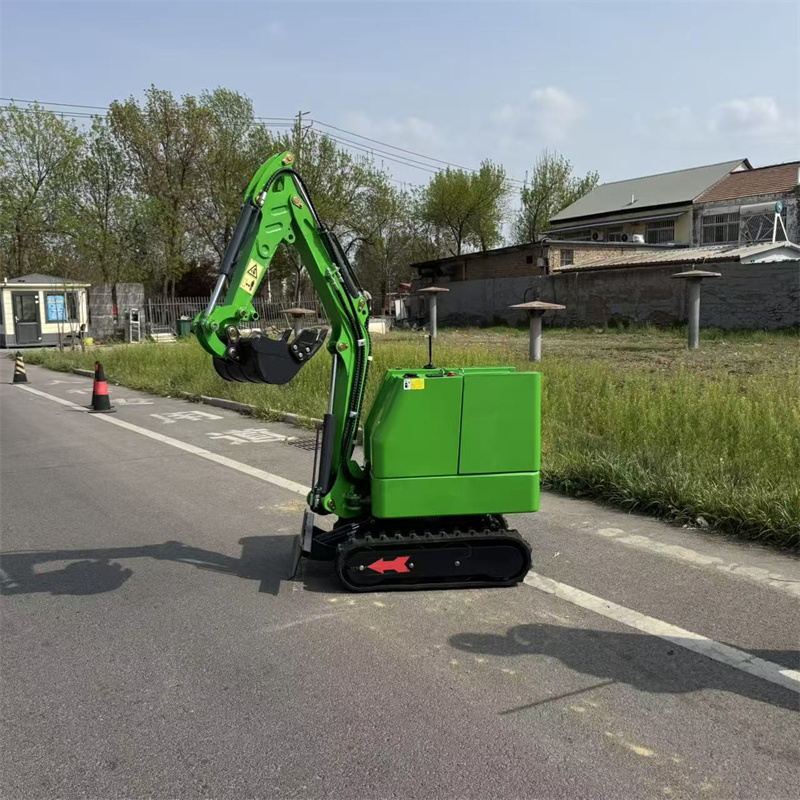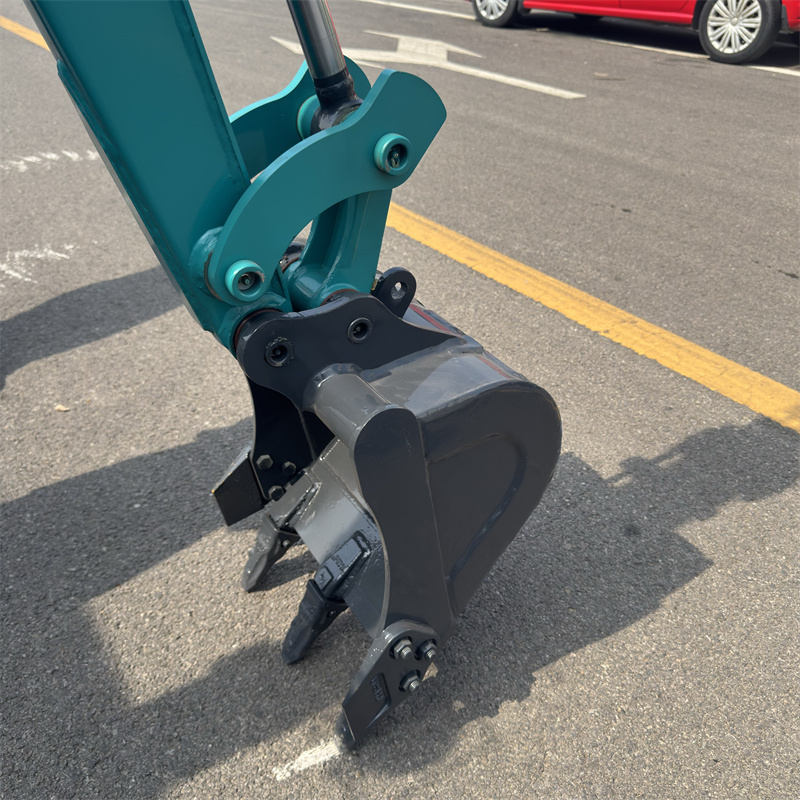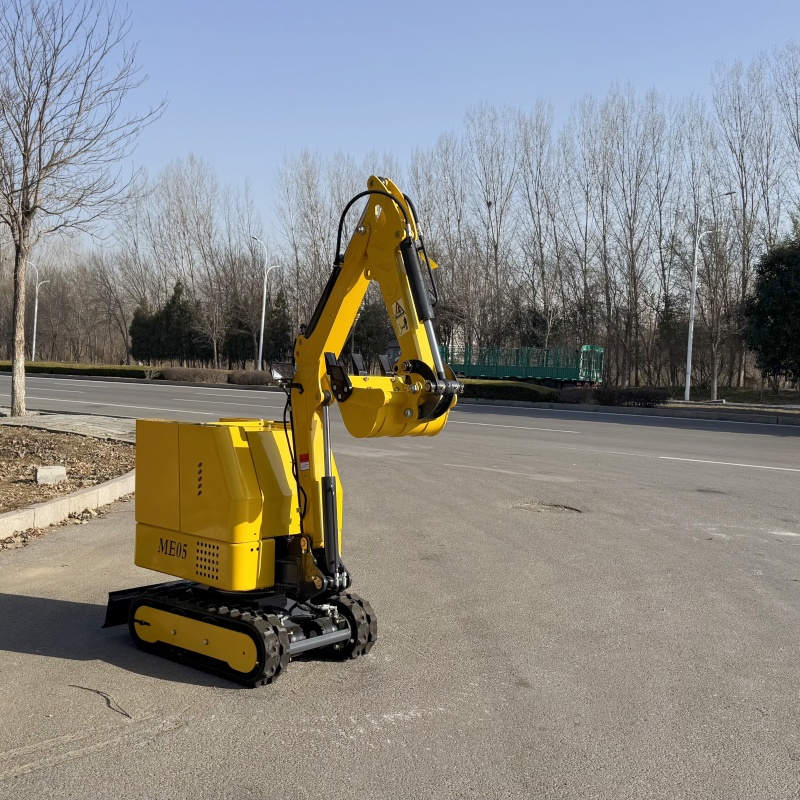

Precautions when walking on a slope
In order to prevent the machine from tipping or sliding, strictly follow the following requirements. When walking on the slope, keep the working device to a height of 20 to 30 cm on the ground. In an emergency, the device can be quickly lowered to the ground to stop the machine. When walking uphill, turn the cab toward the uphill direction. When walking on the current slope, turn the cab toward the downhill direction. When walking, be sure to check the hardness of the ground in front of the machine.
When climbing a steep slope, extend the deviceahead and keep it 20 to 30 cm above the ground and walk at a low speed to increase balance. On the current slope, the engine speed should be reduced to keep the walking lever near the “middle” position, and walk at a low speed. When walking downhill on a slope above 15 degrees, as shown on the right, keep the sprocket (1) on the downhill side, reduce the engine speed and walk. It is very dangerous to walk straight up and straight down on the slope, or to cross the slope or to walk in the horizontal direction. Do not turn on or cross the slope. Be sure to go down to a flat area to change the direction of the machine, and then go up the slope. Walk at as low speeds as possible on grass, fallen leaves, or wet iron plates, as the machine is at of slipping even on small slopes. After the engine stops, immediately shift each lever to the “middle” position and restart the engine.
Note points when working on a slope
When working on the slope, when operating the rotary or working device, the machine will be out of balance and tipping. Therefore, a flat area should be provided and operated with great care. When the bucket is filled with sand, if turning from the uphill side to the downhill side, the machine will roll over and should not be allowed. If the machine must work on A slope, build A mound (A) to keep the machine on horizontal and solid ground to avoid the machine overturning.
Hazardous operations are prohibited
Absolutely do not dig the working face below the suspended part, which will have the risk of falling rocks or sand collapse. Dont dig too deep in the front and bottom of the machine. Otherwise, the ground below the machine may collapse to drop the machine.
Note for snow or freezing
Snow-covered or frozen workplaces are very slippery. When walking or operating the machine, take special care not to operate the control lever suddenly. Even very small slopes can also make the machine skid. Therefore, special attention is paid when working on the slope. The frozen ground will become soft when the temperature rises, which will cause the danger that the machine will roll over or cannot escape. Pay special attention to it. If the machine enters the deep snow, there is a danger of overturning or burying it in the snow. Be careful not to leave the shoulder or fall deep in the snow. During snow removal, objects on the shoulder and near the road are buried in the snow, so there is a danger of the machine tipping or bumping into the buried object, so it must be careful.
Note when parking the machine
Park the machine on a solid, flat ground. Choose the machine where there is no danger of landslides, falling rocks or flooding. Lower the working unit and the soil shovel completely to the ground. Start the engine with an auxiliary cable. If the method of connecting the auxiliary cable is wrong, it will cause the battery explosion, so do it according to the following provisions. When starting with auxiliary cables, two people should start operations (one sits in the drivers seat and the other operates the battery). When starting with another machine, do not let the normal machine contact with the faulty machine. When connecting the auxiliary cable, transfer the starting switch to the OFF (off) position. Otherwise, when the power supply is switched on, The machine is in danger of moving. When installing the auxiliary cable, you must first connect to the positive electrode (+) terminal. Instead, when removing the auxiliary cable, first connect the negative (-) terminal (ground) side. When removing the auxiliary cable, be careful not to let the auxiliary cable clips contact each other or let the cable clips contact the machine. When starting the engine with auxiliary cables, be sure to wear goggles and rubber gloves. For the normal machine connecting the auxiliary cable, the battery has the same battery voltage as the faulty machine.
Operation chart